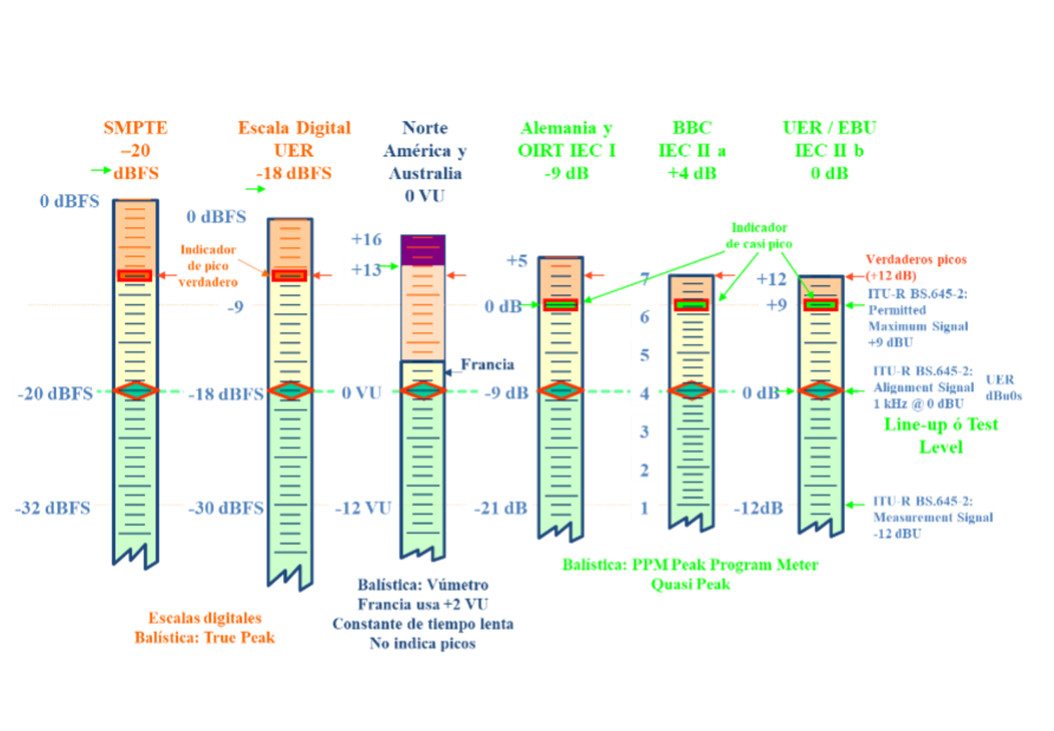
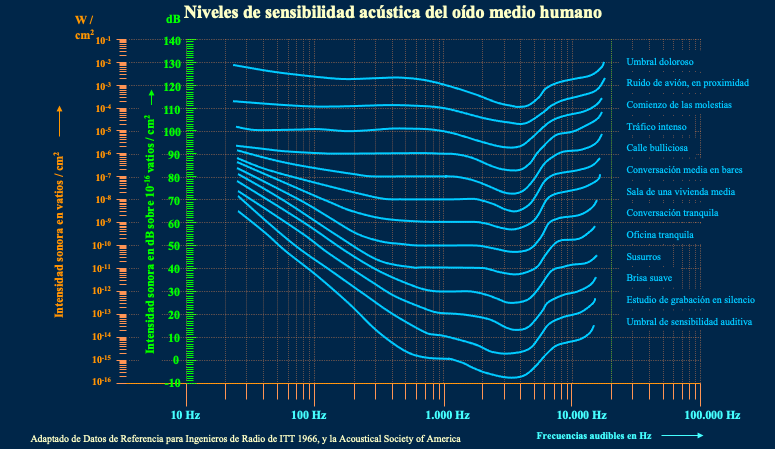
In order to avoid excessive jumps in audio levels when switching between programs and commercials or between channels, it is necessary to establish a regulation regarding loudness?that is, the perceived sound level as experienced by listeners.
In 2010, the European Broadcasting Union (EBU) reviewed the requirements for average audio signal levels in programming for production, distribution, and transmission.
Following a series of studies, the relevant standards were established: ITU-R BS.1770 and EBU R 128.
EBU R 128 is a recommendation for standardizing audio loudness and maximum signal levels. It is primarily applied during the production and exchange of radio and television program audio and is adopted by broadcasters to measure and control program volume. It was first published by the European Broadcasting Union in August 2010 and most recently revised in August 2020.
R 128 employs an international standard for measuring loudness, based on ITU-R BS.1770. It uses Loudness Units (LU) and Loudness Units relative to Full Scale (LUFS), which were specifically developed for this purpose.
In Spain, the current General Audiovisual Communication Law states that the sound level of television commercials must not exceed the average level of the preceding program. This regulation aims to prevent advertisements from being perceived as louder and more disruptive than the content being viewed.
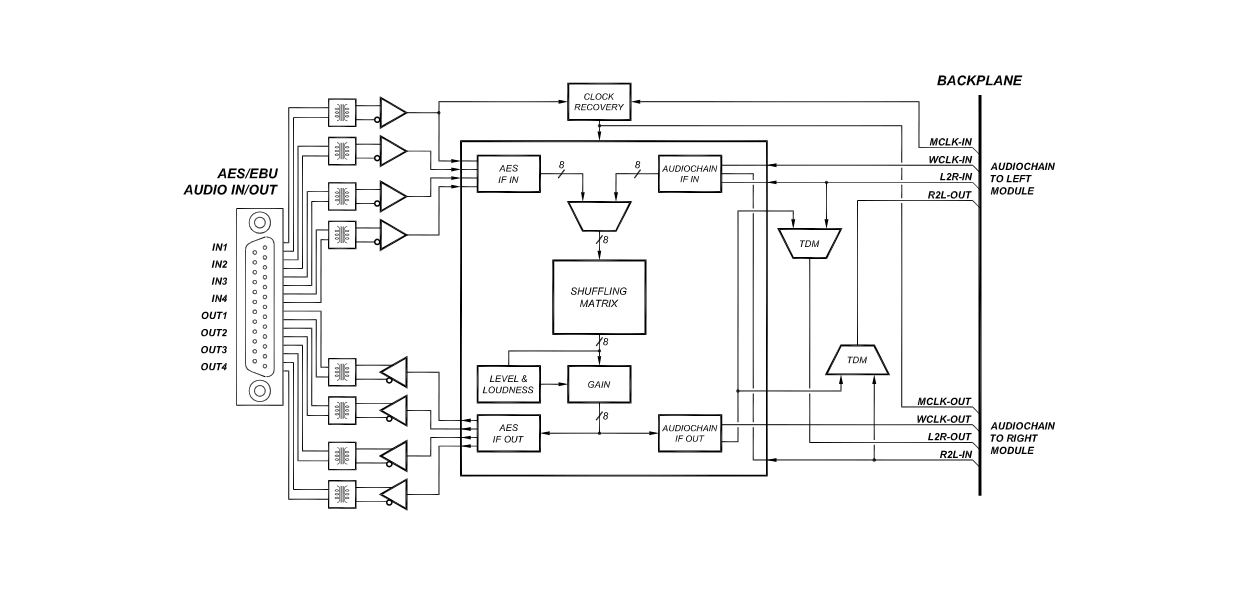
The HAM2008C01 is an audio processing module that automatically manages the level of eight audio signals. It has been designed to operate either as a standalone module?working with the four AES/EBU streams received via the input/output connector?or in conjunction with other modules from the TL2000 series, such as frame synchronizers (when processing audio embedded in video) or various front-end modules that allow the inputs and outputs to be analog audio or digital AES/EBU audio.
To support this functionality, the UR2000 chassis backplane features the AUDIOCHAIN bus, an interconnection that enables the transfer of up to 16 audio channels in each direction between two or more modules located in adjacent slots.
The HAM2008C01 features an eight-channel audio processor that measures the loudness of incoming signals according to ITU-R BS.1770-4 and adjusts their level to match the loudness target set by the user. This process is carried out regardless of whether the audio channels are monophonic, stereo pairs, or grouped into multichannel 5.1 audio.
In addition to loudness measurement, the HAM2008C01 also performs true peak measurements of the audio signals, as specified by the aforementioned EBU and ITU recommendations.
Beyond its audio processing capabilities, the HAM2008C01 also includes an audio pair switching matrix that allows for reassignment and summing of audio channels. Additionally, the module detects whether the AES pairs carry non-PCM audio (according to SMPTE 337), in which case the audio is neither processed nor altered
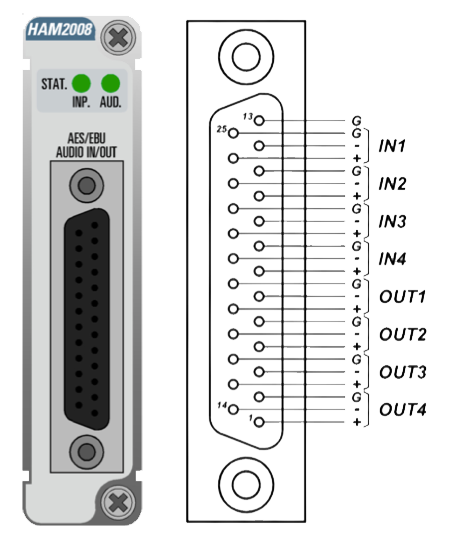
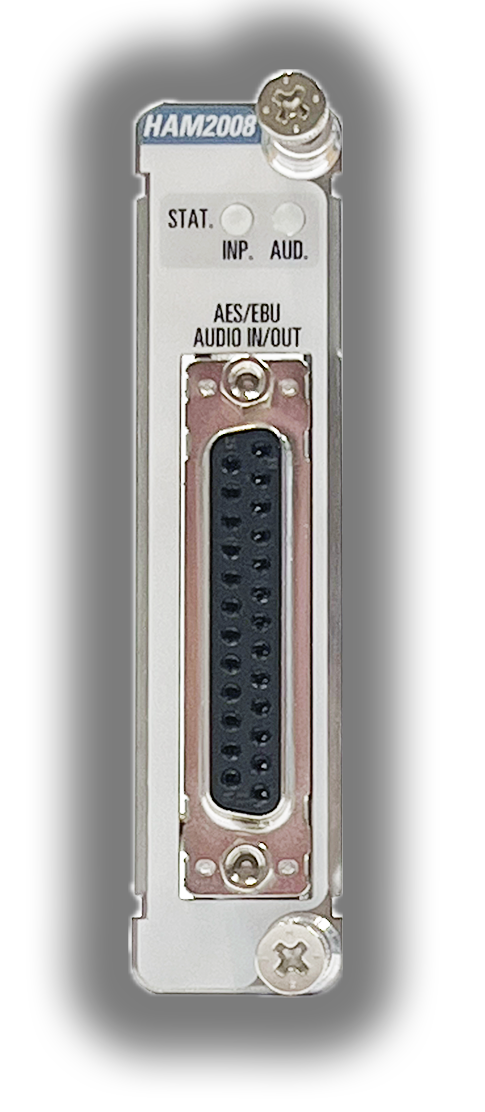
The HAM2008C01 features eight AES/EBU audio interfaces on a 25-pin female Sub-D connector labeled AES/EBU AUDIO IN/OUT. Four of these are inputs (IN1, IN2, IN3, and IN4) and the remaining four are outputs (OUT1, OUT2, OUT3, and OUT4). The pin assignment for this connector follows the AES 59 standard.
The front panel includes indicators and controls located within the STATUS section, described below:
? INP.: This indicator lights green to show that all audio channels being processed have valid signals, are locked, and have correct parity bits. It lights red if any of these conditions are not met.
? AUD.: This indicator lights green to indicate there are no overloads or silence errors in the processed channels, and that the maximum gain adjustment level has not been reached on any of them. It lights red otherwise.
The audio inputs to the processor can come either from the digital audio input interfaces or from adjacent modules. The processed audio is sent to the digital audio output interfaces and to one of the two adjacent modules.
AES/EBU Inputs
For the equipment to function properly, the sampling frequency of the incoming AES/EBU audio streams must be 48 kHz and must be synchronous with the module?s internal sampling frequency. To achieve this, an appropriate reference signal must be provided to the equipment generating the streams.
If asynchronous AES/EBU audio inputs are required, this can be achieved using a DEF2008C01 front-end module, which utilizes the chassis? internal AUDIOCHAIN bus.
AES/EBU Outputs
The AES/EBU outputs from the HAM2008C01 are synchronous with the input to which the module is locked (either AES1 or AUDIOCHAIN). The audio channels sent to the AUDIOCHAIN bus are the same as those sent to the outputs OUT1 through OUT4.
The audio processor autonomously regulates the loudness level of the audio channels, acting as a loudness normalizer.
Additionally, at the output of the processor, there is a switching matrix for the audio pairs that allows reassignment of the channels.
The user can enable or disable processing for each audio pair. Any pairs for which processing is disabled?or where non-PCM data is detected?are passed through unchanged. This ensures that the AES frames embedded in the input video are the same as those embedded in the output video. In this way, compatibility is guaranteed with compression systems that transmit frame-based data, such as Dolby-E
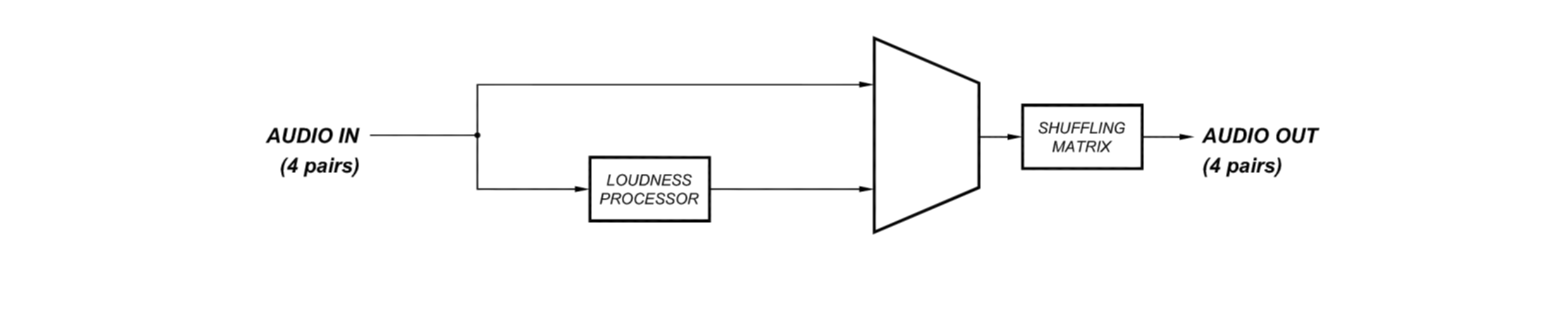
To normalize loudness, the first step is to measure the loudness of the input audio. The loudness meter provides three types of measurements:
? Momentary Loudness (M)
? Short-Term Loudness (S)
? Integrated Loudness over a Period (I_P): Measures integrated loudness over a user-selectable time period ranging from 30 seconds to 6 minutes, also performing gating operations.
To carry out normalization, the integrated loudness over a period is measured and compared to the user-selected target loudness. The difference is then applied as gain. According to EBU Tech. 3341 RP.128, the integrated program loudness over time must be -23 LKFS.
The HAM2008C01 requires remote control for configuration.
To enable remote configuration and monitoring, the chassis housing the HAM2008C01 must be equipped with a communication controller module from the TL2000 family.
The following functions can be performed on the HAM2008C01 module:
? Assign channels between the AES/EBU inputs and outputs and the AUDIOCHAIN.
? Adjust and monitor audio channel levels.
? Monitor the presence and lock status of audio signals received via AES/EBU inputs and AUDIOCHAIN.
? Monitor the audio signal level (loudness, peak, and gain) on each audio channel.
? Configure loudness normalization parameters.
? Manage user presets.
AES/EBU audio input/output interface via AES 59 connector and the TL2000 terminal series chassis internal bus (AUDIOCHAIN).
Processor for automatic level management of eight audio signals, which can be received through four AES/EBU interfaces or via an AUDIOCHAIN interface.
The processor enables loudness normalization according to the EBU R 128 standard.
Loudness meter compliant with ITU-R BS.1770-4 and EBU Tech. 3341 recommendations:
-Momentary Loudness (400 ms integration period)
-Short-Term Loudness (3 s integration period)
-Integrated Loudness over a predefined time interval (30 s to 6 min)
True Peak value meter
Detection of AES/EBU frames containing non-PCM audio (SMPTE 337), ensuring compatibility with Dolby E
The processor includes a matrix that allows full routing of audio between inputs and outputs, as well as summing of two channels
Remote control and monitoring capability via a communications module located in the same chassis
Low power consumption technology

 Albalá Ingenieros